
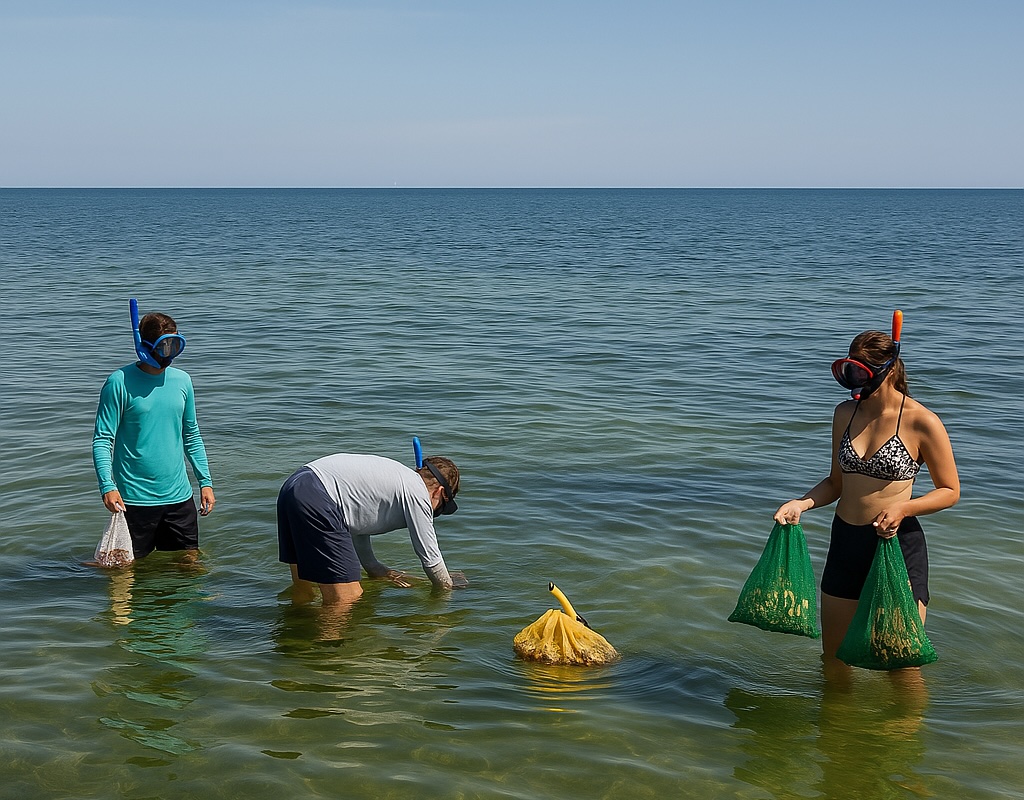
In the Big Bend region of Florida, summer means one thing for a lot of folks: it’s time to swap the rods and rifles for a snorkel and a mesh bag. Starting in June, the shallow grass flats off Steinhatchee and the Econfina River area come alive with bay scallops—and for sportsmen who know the area, it’s one of the most straightforward, rewarding ways to put fresh seafood on the table.
This part of the Gulf doesn’t have the high rises or crowds you’ll find farther south. What it does have is miles of productive flats, clean water, and consistent scalloping if you know where to go and hit the tides right. Whether you’ve got a family crew in tow or you’re looking for a low-key break from your usual fishing vacations, scalloping around here is a relaxing way to stay on the water—and still come home with a cooler full of gourmet-quality seafood.
This part of Florida’s Big Bend is known as the state’s “Nature Coast,” and when you come here for the first time, you’ll quickly discover why. You won’t find high-rise condos or crowded beaches. Instead, you find a mosaic of sandy barrier islands, lush seagrass beds, and winding estuarine creeks that together create ideal habitat for the bay scallop (Argopecten irradians).
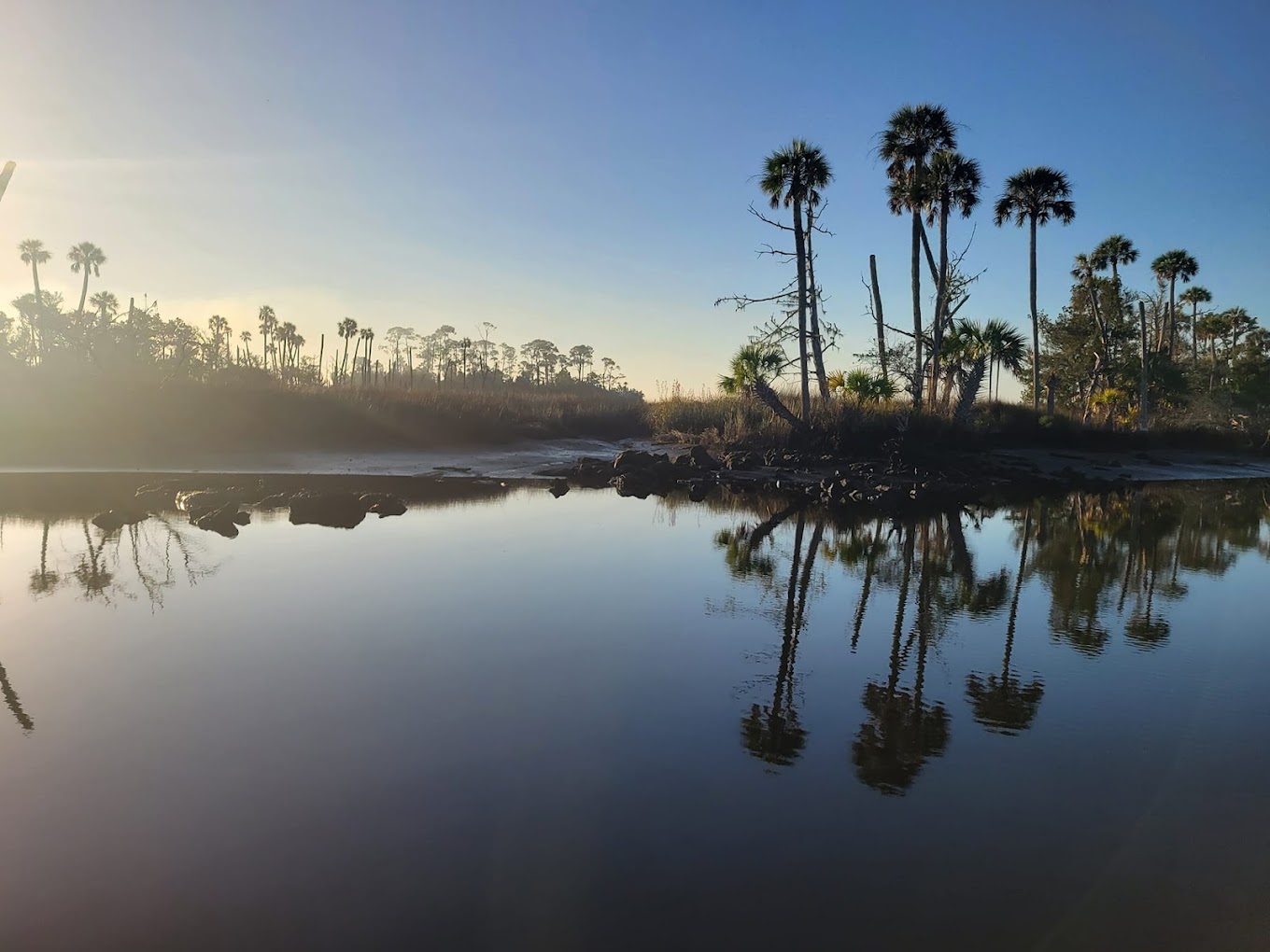
Our specific environment—shallow flats with just the right mix of salt and fresh water—produces a summertime scallop crop that draws families and dedicated sportsmen from all over the South. Between Port St. Joe and Tarpon Springs, snorkelers dot the grass flats each summer, and in Steinhatchee, it’s practically a town holiday when the season opens.
There are more boats than stoplights in these parts, and the evening’s excitement is a dockside scallop feast rather than any nightclub. If you’re a sportsman who appreciates both natural richness and a refined sporting lifestyle, scalloping adventures here give you access to the best of both worlds: swimming and hunting in the wild shallows by day—and the comfort of Econfina—North Florida’s premier hunting & fishing lodge—by night.
This guide to scalloping in the Big Bend goes over when the season starts and ends around here, regulations, what gear to bring, ideas for where to launch, and how you can get the most out of a day scalloping on the flats. We’ll also talk a bit about Econfina Sporting Club—a comfortable place to stay for scallopers and their families who aren’t looking to “rough it”—and we’ll even throw in some tips on cleaning and cooking your catch once you’re back on dry ground.
Season & Regulations: Know Before You Go
Note: Effort has been made to make sure this information is accurate and up to date at the time of writing. However, scallop season dates, harvest limits, regulations, boat access details, and other information can change from year to year—or even mid-season. Before heading out, it’s always smart to double-check current rules and conditions with the Florida Fish & Wildlife Conservation Commission (FWC) or local authorities to avoid surprises on the water.
When is Scallop Season?
In Florida, bay scallop season is tightly regulated to protect the resource, and dates vary by region. The Big Bend—especially the waters around Steinhatchee—enjoys one of the earliest and longest seasons. In the Steinhatchee area (Fenholloway River to Suwannee River zone), the season opens June 15 and runs through Labor Day each year. This window gives you the entire summer to plan your trip.
Note, however, that the first two weeks come with special limits to ease into harvest pressure:
- From June 15–30, each person may take 1 gallon of whole scallops in-shell (or 1 cup of shucked meat) per day, with a max of 5 gallons whole (or 2 pints meat) per vessel.
- Starting July 1 through Labor Day, the limit increases to 2 gallons whole (or 1 pint meat) per person, and up to 10 gallons whole (or ½ gallon meat) per vessel.
These limits are per day’s catch, and remember: the vessel limit is a cap, not a bonus—a boat of two people still can only take 10 gallons total, and no individual can exceed the personal limit
There is no minimum size for bay scallops in Florida, but good sportsmen practice restraint by letting the smallest scallops be. (Conservation groups even hand out “scallop sorters” to help you cull undersized ones and allow them to spawn for future seasons. Also note that commercial harvest is prohibited—this is strictly a recreational pastime!
Licensing, Rules, and Regulations
To scallop in Florida, each harvester must have a current Florida saltwater fishing license (recreational), unless you’re on a licensed charter or you’re wading from shore without a boat. For most readers of this guide, you’ll be boating out to the grass flats, so make sure to obtain a license from the Florida Fish & Wildlife Conservation Commission (FWC) ahead of time. It’s an easy online process, and short-term licenses are available for non-residents. The cost is minor, and the license helps fund conservation efforts that keep these scallop populations healthy year after year.
Harvesting rules are otherwise straightforward: no scuba tanks are required (scallops live in shallow water), and the only allowable methods are by hand or using a landing/dip net. Essentially, you snorkel at the surface, spot the scallop, then dive down and grab it (or scoop with a small net). You’ll likely spend hours in the water, so plan accordingly (more on gear in the next section).
Florida law requires that any time you’re in the water snorkeling (or diving) you must display a “Diver Down” flag on your vessel (the classic red flag with a white diagonal stripe). This is absolutely essential for safety—it alerts other boaters that there are people in the water. In a popular scalloping area like Steinhatchee, there could be dozens of boats and swimmers spread out, so don’t skip the dive flag (it’s not just smart, it’s the law).
It’s a good idea to have a boat lookout or practice the buddy system: one person can stay aboard to keep an eye out while others snorkel, or at least everyone should periodically look up and ensure the boat hasn’t drifted and that other boats see your flag.
Summary of Big Bend Scalloping Rules (Steinhatchee Area)
- Season: June 15—Labor Day (for Fenholloway–Suwannee zone, which covers Steinhatchee). (Other nearby zones differ; e.g., areas west toward Econfina may open July 1—check if venturing outside the Steinhatchee zone.)
- Open Area: Coastal waters from Fenholloway River (near Keaton Beach) to the Suwannee River. This covers all the prime scallop grounds off Taylor and Dixie counties. Stay within these boundaries—areas outside have different dates or may be closed.
- Daily Bag Limit (June 15–30): 1 gallon whole or 1 cup meat per person; 5 gallons whole or 2 pints meat per vessel.
- Daily Bag Limit (July 1–Labor Day): 2 gallons whole or 1 pint meat per person; 10 gallons whole or ½ gallon (4 pints) meat per vessel.
- Other Regulations: No size limit; harvest by hand or dip net only; no commercial take. Saltwater fishing license required for each harvester (unless on a guided charter). Diver-down flag required when swimmers are in the water (safety regulation).
Abiding by the Sunshine State’s rules ensures a fun outing and helps conserve the scallop population so that this grand summer tradition can continue for generations to come.
Gearing Up: What to Bring on a Big Bend Scalloping Trip
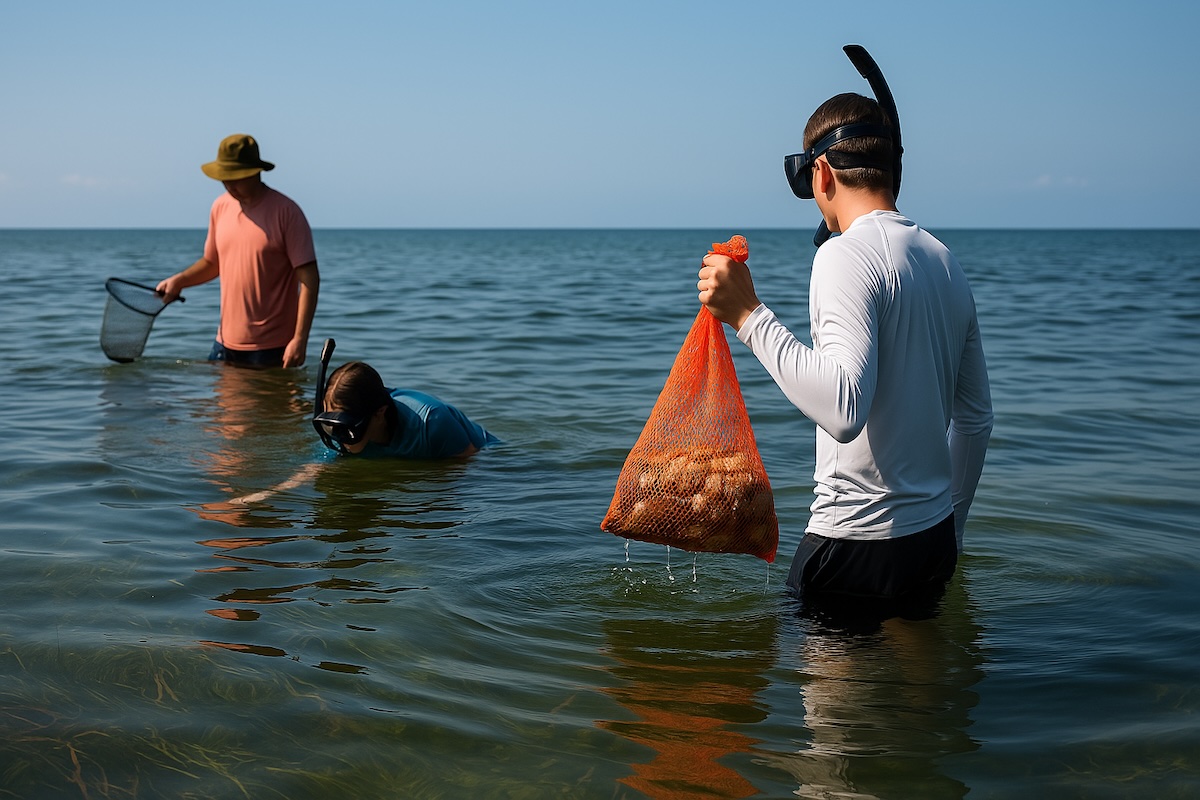
One of the delights of scalloping is its simplicity—you don’t need specialized tackle or expensive equipment to participate. With that said, having the right gear will make your experience safer, more comfortable, and more productive. Here’s a checklist of essentials and a few creature comforts favored by experienced scallopers:
- Mask, Snorkel, and Fins: Your primary tools for this underwater hunt. A good-quality mask that doesn’t fog and a snorkel that lets you breathe easily while face-down in the water are must-haves. Fins (flippers) will help you swim efficiently as you cover ground over the grass beds. Tip: Test your gear beforehand for fit—a leaky mask or uncomfortable fins can spoil the fun. Many sportsmen bring a backup mask/snorkel set as well, especially if in a group, in case of gear failure.
- Mesh Bag or Wire Basket: As you collect scallops, you’ll need a place to stow them. A mesh catch bag that clips to your belt or floats behind you is ideal. Some use a small wire basket or even a dip net with a fine mesh to scoop scallops off the bottom. Make sure whatever you use can drain water and is secure (you don’t want your hard-won scallops floating away).
- Dive Flag: As mentioned in the regulations, a diver-down flag is non-negotiable. It should be mounted on a pole high enough to be seen 100 yards away. Many boaters also attach a smaller dive flag buoy that they tow near them while snorkeling, especially if they range far from the boat. This isn’t a requirement, but an extra safety measure that lets nearby boats know exactly where you are.
- Sun Protection: Even though you’ll be half-submerged much of the time, don’t underestimate the Floridian summer sun. Waterproof sunscreen, applied liberally on your back, neck, and backs of legs, is vital. A wide-brimmed hat and polarized sunglasses are great for the boat ride and when scouting the water from above (polarized lenses help cut glare and spot scallops below the surface ). Many scallopers wear a lightweight long-sleeve rash guard or sun shirt in the water to prevent sunburn—it also protects against jellyfish stings or irritating sea grasses.
- Water and Snacks: Scalloping is active work—you’ll be swimming, diving, and exerting yourself in warm weather. Pack plenty of water or sports drinks to stay hydrated. A small cooler on the boat with chilled drinks and some snacks (fruit, protein bars, etc.) will help you recharge between dives. Remember, alcohol and intense sun exposure don’t mix well; save the celebratory cold beer for after you’re off the water.
- Gloves (optional): Some scallopers like to wear thin neoprene or rubberized gloves. Scallop shells can be ragged and sometimes they’ll snap shut when picked up. Gloves can protect your fingers from minor nicks and give better grip in grabbing the shells. This is optional—many go bare-handed—but if you’re a hunter used to gloves or just want the extra protection, bring them along.
- Wetsuit or Dive Skin (optional): In the peak of summer, Gulf of America waters are bath-warm (often 80–85°F or 27–29°C). Most people are fine in just a swimsuit and shirt. However, if you tend to get chilly or want protection, a thin 1–3mm shorty wetsuit or a full-body lycra dive skin can be useful. They also guard against sun and jellyfish. Early in the season (mid-June), water can be a bit cooler, so some appreciate a wetsuit then.
- Boat Gear: If you’re captaining the trip, don’t forget your standard boat safety checklist. Life jackets (one per person, plus a throwable device), a first-aid kit, a VHF radio or fully charged phone for emergencies, navigation charts or GPS, and an anchor (you’ll be anchoring on the flats while you dive). Anchoring tip: Approach your scalloping spot slowly and avoid powering onto very shallow flats—you don’t want to churn up seagrass beds with your propeller. Instead, stop in 4–6 feet of water and anchor. Consider using a drift sock or second anchor if it’s windy to keep the boat from drifting too much.
- Cooler with Ice: This is for storing your scallop catch. As soon as they’re onboard, get your scallops on ice. Not only will this preserve their freshness, it also causes them to relax and begin to open their shells, which makes cleaning easier later. Use a well-draining cooler so the meltwater drains away (prolonged exposure to fresh water can actually kill and spoil scallops—cold ice is fine, but they shouldn’t sit submerged in water). A rule of thumb: bring more ice than you think you need, both for your drinks and your scallops.
Photography Gear (optional): The Big Bend’s clear waters and lively seagrass beds make for great underwater photos. Upper-end sportsmen often enjoy documenting their adventures. If you have a waterproof camera or a GoPro, this is a fun opportunity to capture photos of the underwater hunt—the glowing scallop “eyes,” schools of fish, and your fellow snorkelers diving down. It’s a great way to relive the day’s excitement when you’re back at the lodge.
Lastly, remember your pre-trip prep: The night before, double-check the local marine forecast and tides (more on that below). Ensure all your gear is packed and functioning. Steinhatchee is remote—while the marinas have basic supplies (and you can buy or rent snorkel gear locally if needed), you don’t want to rely on last-minute shopping. The well-prepared sportsman will arrive with everything needed for a self-sufficient adventure.
With your kit assembled, you’re ready for the flats. Now let’s talk about getting out to those scallop grounds and what to expect on the water.
Boat Access & Navigating the Waters
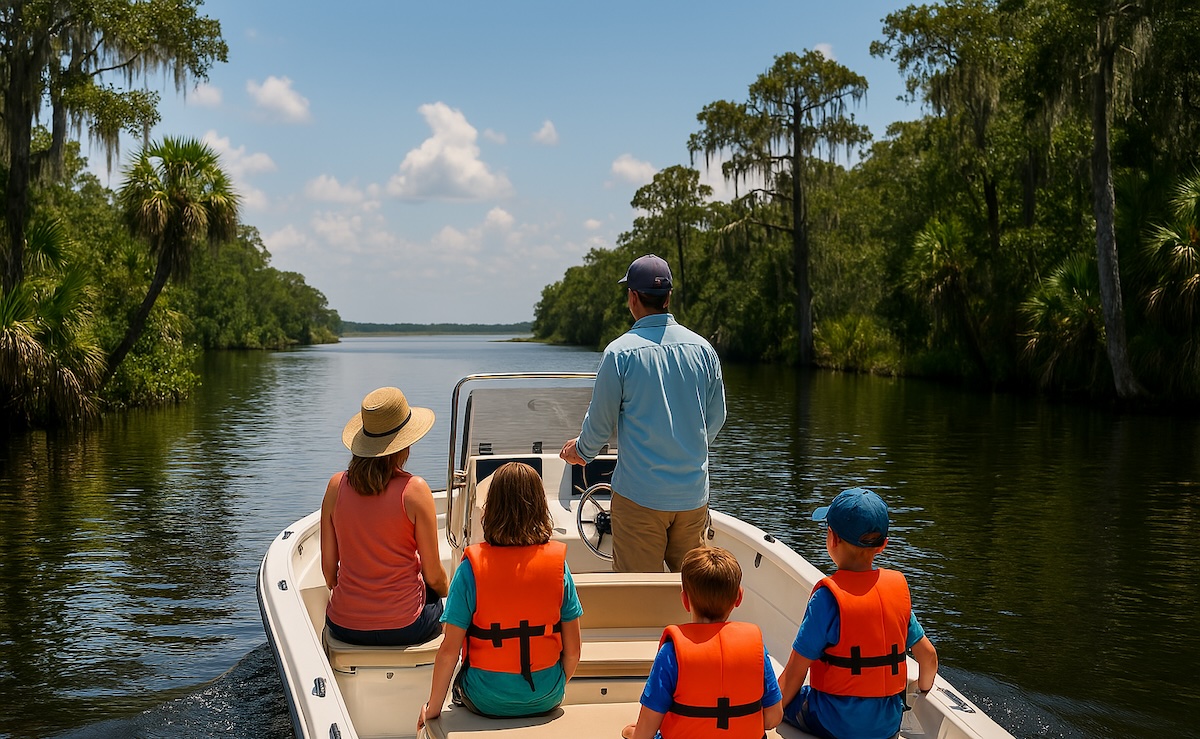
One of the appeals of scalloping in the Steinhatchee and Econfina area is that prime grounds are just a short boat ride from shore. This region’s coast is shallow and gently sloping—you can travel a few miles out and still be in less than 6 feet of water. Both Steinhatchee and Econfina offer launch points to reach the scallop zones, each with its own character.
Steinhatchee Boat Ramps
A quick heads-up: Boat ramp conditions, access hours, and available amenities like parking can change due to weather, maintenance, or local regulations. Specifics like parking availability, ramp condition, facility hours, and so on may differ from what’s described here, especially if conditions have changed since our last update. It’s always a good idea to check in with local marinas, county websites, or Florida State Parks before trailering out—especially if you’re relying on a more remote launch.
Steinhatchee has an excellent public boat ramp right in town, at the Steinhatchee/Ideal Marina on 1st Avenue South. This facility offers multiple concrete launching lanes, floating courtesy docks, and ample trailer parking (40+ spots)—a godsend on busy scalloping weekends. There are porta-toilets on-site and even nearby fish cleaning stations (which double for scallops). On a typical July morning, you’ll see a small armada of bay boats, skiffs, and pontoon boats launching here, with cheerful families and groups of friends gearing up. Despite the bustle, everything runs efficiently—a testament to the town’s long tradition of hosting scallopers. If you’re staying in Steinhatchee or coming from the south (e.g., Crystal River, etc.), this ramp is likely your best bet. Pro tip: Get there early (before 8 AM) on weekends, as parking can fill up by mid-morning.
From the Steinhatchee River mouth, scallop grounds spread both north and south. Locals will often zip out the Steinhatchee channel to where it meets the Gulf (around Marker #1) and then veer northward toward Keaton Beach or southward toward Pepperfish Keys, depending on reports of water clarity and scallop abundance . Early in the season, many go north (up toward Big Grassy Island and Keaton Beach), which is roughly 5–7 miles from the river mouth, where scallops tend to be plentiful . Later in the summer, heading south a few miles (to areas like Rocky Creek or the Pepperfish Keys) can be productive as well . Essentially, scallops can be found in all directions once you’re out of the river—your strategy might depend on water clarity (steer clear of the darker plume of the Steinhatchee River outflow by moving until the water turns a pretty green-blue) and on crowds (some prefer to avoid the largest congregations of boats and find their own patch of grass).
Boat Etiquette & Safety
At peak season, you might see 50-100 boats spread out across the flats in popular areas . This isn’t as hectic as it sounds; the area is vast, and boats naturally space out. Nonetheless, vigilance is key. Maintain a safe idle speed when near other boats or dive flags, and give a wide berth to any snorkelers in the water. Never drive through a field of dive flags—not only is it illegal to get too close, it’s extremely dangerous. Instead, swing wide around the scalloping fleet and only approach a spot to anchor when you’ve identified a clear area. Once anchored, display your own dive flag prominently, and remind everyone in your crew to stay reasonably close to the boat (wandering a hundred yards away increases risk of boaters not seeing you). Fortunately, the culture in Steinhatchee is a friendly and aware one—boaters tend to look out for each other, and the presence of many families means everyone is a bit more cautious and respectful.
Navigational Hazards
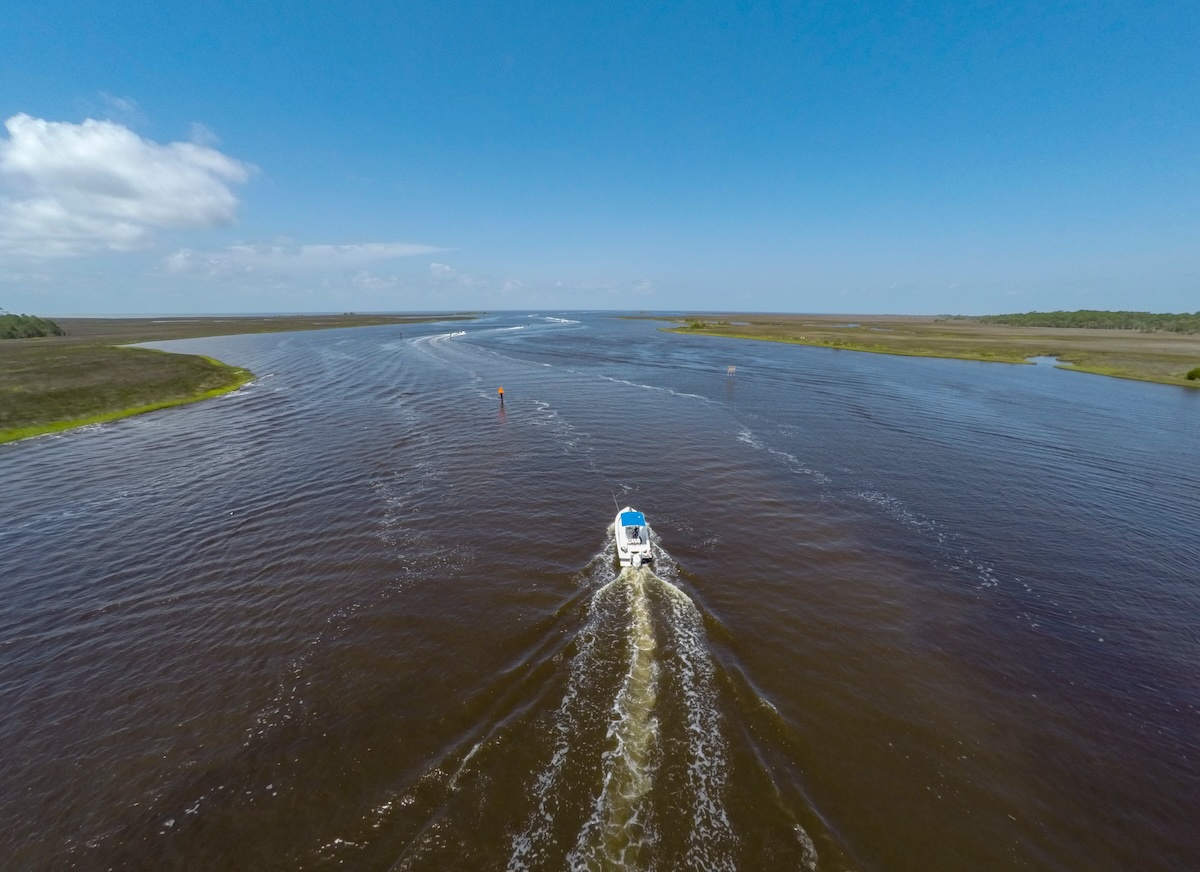
The Big Bend is shallow and can be difficult to navigate if you don’t watch the tides. Sand bars and seagrass shoals emerge at low tide, and it’s not uncommon for an inattentive boater to find themselves temporarily stranded when the water recedes.
Always consult tide tables for where you will be scalloping near Steinhatchee (or the nearest reference point) on the day of your trip. If you ventured deep into a flat on a rising tide, be mindful of the time—you’ll want to head back before a falling tide leaves too little water for your boat’s draft. Running aground not only disrupts your day, it can damage sensitive seagrass beds. The rule is: if in doubt, idle. Many scalloping boats are shallow-draft and can float in 2–3 feet—if you see water that looks marginal, trim your motor up and go slow or troll in.
Also, the Steinhatchee River channel itself is well-marked but narrow. Follow the markers religiously, especially at low tide, as outside them can be mere inches deep. Many a propeller has been dinged near the river mouth by cutting a corner too sharply.
Econfina River Access
For scallopers who prefer a more remote experience (and perhaps to be closer to the Econfina area grounds), the Econfina River State Park has a small boat ramp at the end of County Road 14 south of US 98 (Source: Florida State Parks). This ramp is suitable for small boats—jon boats, Gheenoe-style skiffs, or shallow-draft bay boats up to ~18 feet. It’s a narrow, single launch and rustic (no attendants, limited parking), but it puts you right at the mouth of the wild Econfina River and its fishing spots.
From there, you’re about 2 miles to open Gulf water, entering a stretch of coastline that sees far fewer visitors than Steinhatchee. If solitude and adventure are what you crave, launching here can be rewarding. You might have vast stretches of grass flats near the Econfina, Aucilla, and Fenholloway River mouths almost to yourself, even on weekends. Just be sure your navigation and boat skills are solid—this is a “no-frills” zone with no nearby tow services or marinas if something goes awry. Also, keep an eye on afternoon thunderstorms (common in summer); you won’t want to be caught in a lightning storm in a small boat miles from the ramp.
The flip side is an almost undisturbed scalloping experience: the water off Econfina is often gin-clear, and while it’s mostly anecdotal, some fishing guides say the scallops in this corner of The Sunshine State may even be larger on average than in other parts of Florida due to the lighter harvest pressure.
Water & Weather Conditions
Summertime on the Gulf of America is generally hot, calm in the mornings, and stormy in late afternoon. Plan to do your scalloping in the morning to early afternoon hours. Typically, by 3–4 PM, scattered thunderstorms build inland and often drift toward the coast, bringing sudden wind gusts and lightning—a cue to be off the water.
Check the forecast: a day with low thunderstorm chances and light winds (5-10 knots) is ideal. Water clarity can vary. After periods of heavy rain, runoff can make the near-shore water tannic (tea-colored) especially near river mouths, so you might need to boat a bit farther out or to a different area for clear water. Generally, north of Steinhatchee (toward Keaton Beach) the water is renowned for clarity, thanks to fewer river inflows. To the south (toward Suwannee), the water can be more influenced by the Suwannee River, but on a good day it’s still beautifully clear over the grass beds. Use your polarized sunglasses and look at the water color as you motor out—that telltale turquoise-green hue means clarity and good scalloping ahead.
Despite the often calm seas, always observe standard boating safety: file a float plan (let someone know where you’re going and when you expect to be back), carry emergency communication, and watch for pop-up summer squalls. Even on the flattest morning, the weather can change fast on the Gulf. But in fair conditions, expect bath-like water temperatures (~85°F), gentle sea breezes scented with marsh grass, and an abundance of marine life (it’s not unusual to see dolphins cruising the flats or sea turtles surfacing for air). The Big Bend truly is a sportsman’s paradise, and as you drop anchor on a carpet of seagrass under a vast blue sky, you’ll appreciate just how untouched and productive these waters are.
Scallop Habitat and Behavior
Getting to Know Your Quarry
Before you plunge into the Gulf of America and start searching, it pays to understand a bit about bay scallops and where they like to hide. You can think of it as learning the habits of a game animal before a hunt—the more you know, the more successful you’ll be.
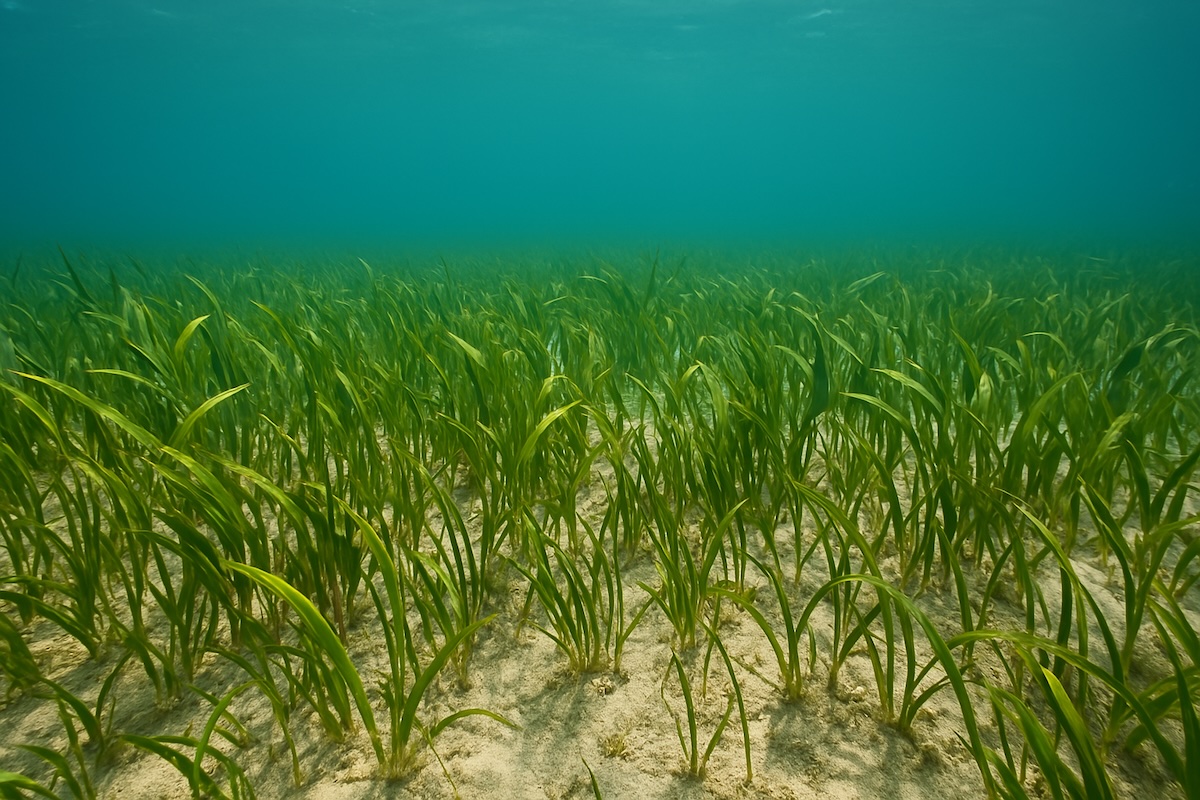
Habitat—Seagrass Beds: Bay scallops are creatures of the seagrass meadows. They thrive in healthy grass flats, especially areas with eelgrass or turtle grass about 2–8 feet deep. In the Steinhatchee region, this describes much of the nearshore Gulf. You’re basically going to be hunting in underwater “fields” of swaying grass.
Scallops rest right on the sandy bottom, often tucked at the base of grass blades or in slight sandy patches within the grass. Unlike clams, they don’t bury themselves; they sit exposed, relying on camouflage and their alertness to survive.
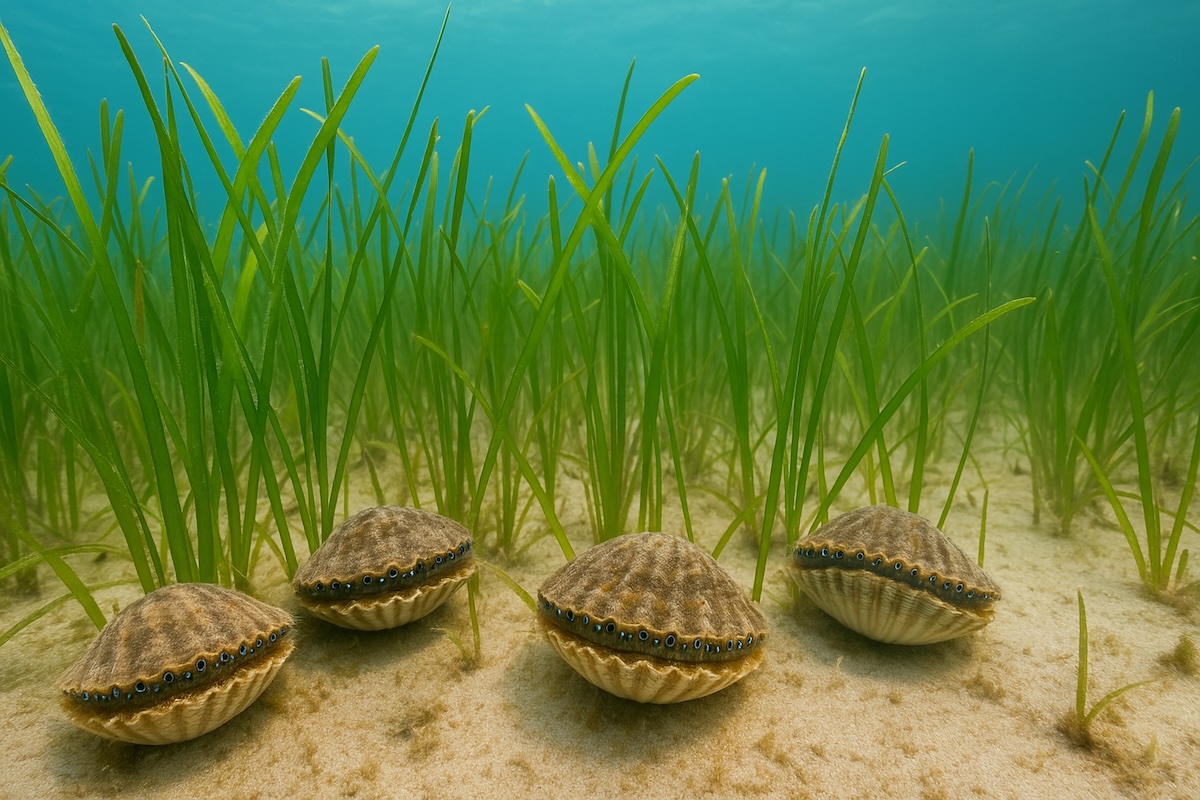
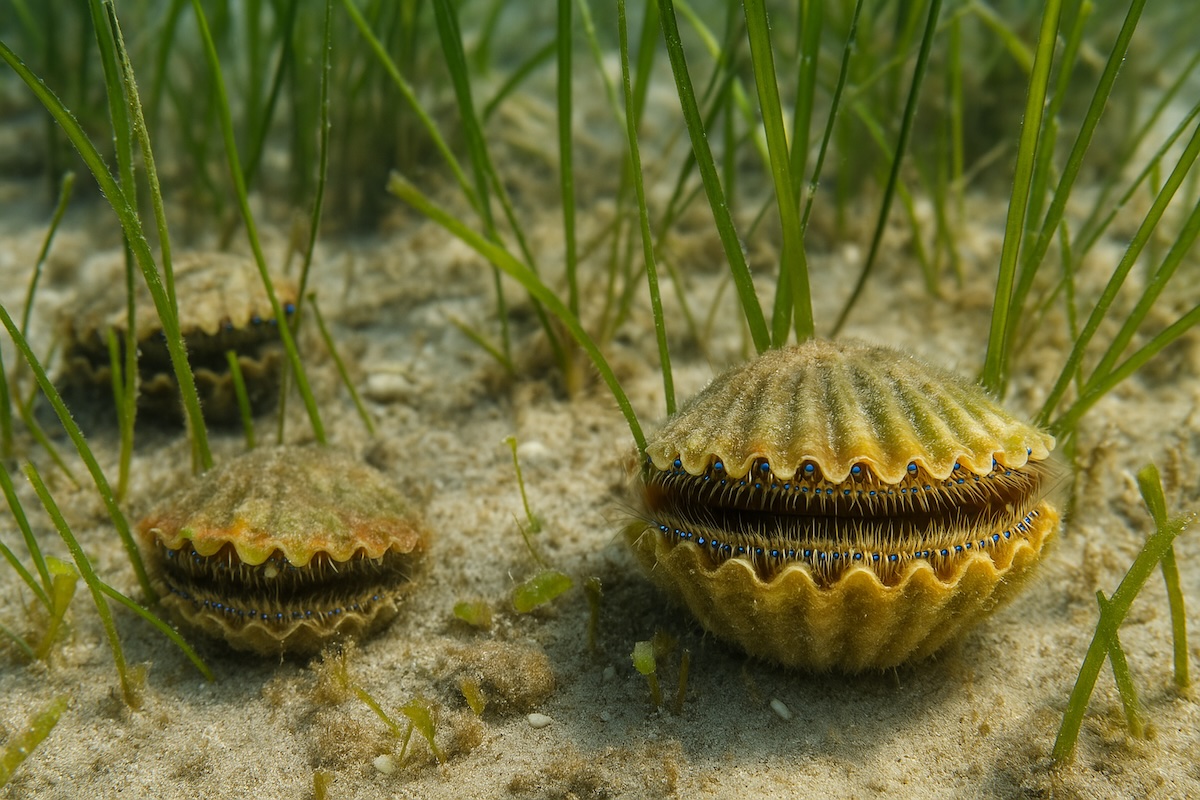
A scallop’s camouflage is surprisingly effective. The convex top of their shell tends to be murky brown or greenish, often encrusted with algae, making them look like just another clump of seagrass or a leaf. The underside of the shell is usually lighter, but you won’t see that when they’re on the bottom. So at first glance, a scallop just blends in. Give your eyes a little time to adjust to the underwater scenery; soon you’ll start picking out shapes. Many people say it’s like one of those hidden-picture puzzles—once you spot one scallop, suddenly your brain knows what to look for and you start seeing them everywhere.
The Telltale “Eyes”: One thing that gives scallops away (and makes them enchanting to observe) is their ring of electric blue eyes. Along the edge of the shell, scallops have about 20 tiny, iridescent blue eyes that can shine like sapphires in the water. When a scallop is sitting calmly and filter-feeding, its shells are slightly agape, and these vivid dots line the mantle. If the sun’s at the right angle, you might catch a glimpse of a blue glint peeking from the grass—that’s your target! As you approach, the scallop may sense you and snap its shells shut (an evolutionary trick to avoid being eaten). When it does, the eyes vanish and it becomes harder to spot. So, often the strategy is to scan slowly for those little blue jewels among the green grass. It’s a bit like scanning the forest for the eye shine of game at night—here you’re looking for a flash of blue in daylight. Once you see it, dive quickly and grab before the scallop scoots away or closes up.
They Can Move! Unlike oysters or clams, scallops are not anchored to one spot. Bay scallops can actually swim—in a fashion. They propel themselves by rapidly clapping their shells, ejecting water in spurts, which can launch them backward in jerky bursts. It’s quite a sight to see a scallop take flight: it will pop up from the bottom, flutter a short distance (maybe a few feet), and settle back down. This is usually a last resort escape response. You might trigger it if you just miss grabbing one—it will bolt, making a short getaway. Don’t worry, they won’t go far. Often they’ll settle back into the grass nearby. In fact, some scallopers like to gently poke around a promising area with their hands, hoping to spook a scallop into revealing itself by swimming. It’s not uncommon to hear muffled excited yells through snorkels when someone witnesses a scallop’s escape maneuver for the first time!
How to Pick Them Up: When you spot a scallop, you’ll want to grab it somewhat firmly but carefully. The ideal method is to approach from behind or the side and place your thumb on one shell and fingers on the other, like picking up a clamshell. If it’s open and you touch it, it will instantly clamp shut—possibly on your fingers. That pinch can startle you, but it’s rarely strong enough to hurt beyond a minor nip (think of a clothespin pinch). To avoid it altogether, seasoned scallopers pick them up from the rear hinge area, where the shells join—this keeps your fingers away from the snapping edges. If you’re using a dip net, you can scoop it right under the scallop and lift it up. Once you have it, tuck it into your mesh bag promptly. Scallops are slippery little nuggets; you don’t want it flailing out of your grasp and back to the bottom.
Clustering and “Scallop Highways”: Often, scallops are not evenly distributed. You may drift over a patch of grass and see none for several minutes, then suddenly you enter an area and start seeing many. Scallops can occur in clumps or loose rows, sometimes jokingly called “scallop highways,” where tidal currents and their own movements concentrate them. If you find one, slow down and search that immediate area thoroughly—chances are there are more nearby. Many a scalloper will tell you, “When you find one, look for its friends.” Taking a moment to do a methodical circle around the spot can pay off in a pile of scallops in short order.
Another natural cue: keep an eye out for other marine life that like similar habitat. For instance, if you see pinfish darting in and out of the grass or a horseshoe crab trundling along the bottom, you’re likely in a healthy grass bed that could hold scallops. Occasionally, you might even spot a starfish (sea star) on the move—these are actually predators of scallops. A robust seagrass community is a good sign that you’re in the right spot.
Local Scallop Density
Over the years, the Big Bend has had natural fluctuations in scallop populations. Some years they’re extremely abundant, others a bit sparser (often related to winter temperatures, rains, and water quality). In recent times, Steinhatchee’s scallop counts have been quite strong, with many visitors limiting out by early afternoon . The nice thing about the Big Bend is that even if the highly popular spots get “picked over” by late morning, you can usually venture a bit farther from the crowds and still find untouched bounty. Scallops don’t move very fast or far (they mostly stay in the same general vicinity their whole lives), so any area that hasn’t been harvested in the last day or two should still hold whatever nature put there. Patience and persistence are virtues—treat it like a leisurely hunt, enjoying the swim and scenery as much as the scallops themselves.
Be aware that as the season progresses (into late July and August), the easy shallow beds near access points may thin out—you might need to hunt in slightly deeper water (7–8 feet rather than 3–5) to find uncollected scallops. The good news is the season runs till Labor Day, and late-season scalloping can be just as rewarding if you’re willing to explore a bit further from the beaten path.
To summarize, just think like a scallop: look for good grass, moderate currents, and places to hide. Move slowly, scan for the subtle signs (shell outlines, the glimmer of blue eyes, or a sudden movement). Pretty soon, you’ll develop that scallop-spotting sixth sense, and your bag will get heavier.
Timing is Everything: Best Tides & Times of Day
Successful scalloping, much like successful fishing or hunting, often comes down to picking the right time to be in the field (or in this case, the water). The interplay of tides, sun angle, and daily weather can greatly influence your comfort and your haul. Here’s what expert locals recommend for when to go scalloping in the Big Bend:
Tides
Veterans of the sport will tell you that scalloping is easiest at lower tides—particularly around low tide or the very beginning of the incoming tide. When the tide is low, the water is shallower, which means you don’t have to dive as deep to grab scallops. If you’re in 4 feet of water at low tide, that scallop on the bottom might only be 3 feet below the surface—an easy duck dive even for beginners.
Now, at high tide that same spot could be 6 or 7 feet deep, requiring longer breath-holds and deeper dives. Shorter dives = less exertion and more scallops spotted per minute. Additionally, around slack low tide, the water movement is minimal, so you won’t be fighting any current while you snorkel.
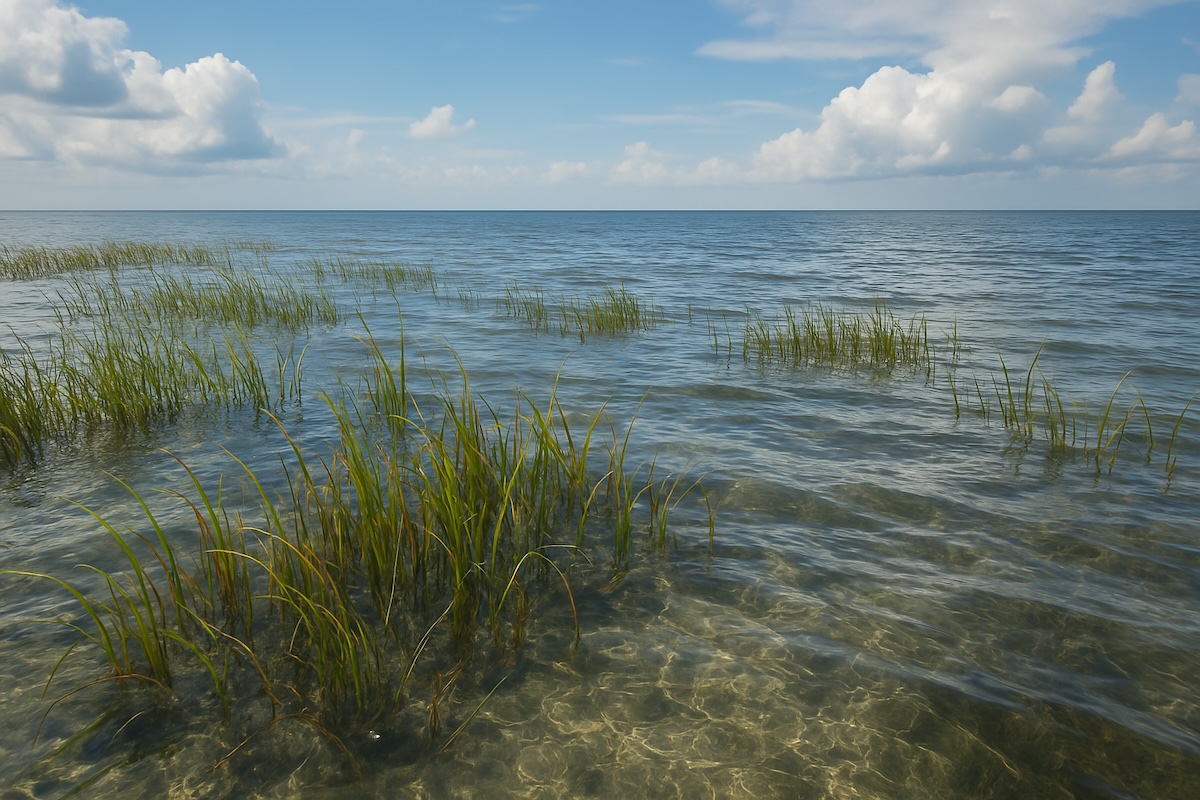
Grass blades tend to stand straight up in slack water, not bent sideways by flow, which can make scallops a bit easier to see (they’re not as obscured)—as the Tampa Bay Times put it, ideally, it’s best to hunt scallops on a slack tide, when the grass blades stand straight up. (SCALLOP SEASON – Tampa Bay Times).
A favorite tactic of scalloping guides is to plan trips with the lowest tide occurring around midday. This scenario checks all the boxes: shallow water and peak overhead sun. If the tide charts align so that, say, low tide is at 1:00 PM, that’s perfect. You can start late morning as the tide is dropping, scallop through the low, and still be on the flats as the first of the incoming tide refreshes the area.
What about strong tides? The Big Bend doesn’t have massive tidal swings (generally 2-3 feet between high and low), but around new or full moons the currents can be stronger. If you happen to go on a day with a ripping tide, it’s not a deal-breaker, but be smart: one trick is to begin your snorkeling “up-current” from your boat when the tide is moving. Then you can leisurely drift back down with the current as you collect scallops, instead of tiring yourself trying to swim against the flow. Essentially, use the current to your advantage—it can carry you (and your whole group) across the flats. Of course, make sure someone is minding the boat position; you may need to re-anchor occasionally to stay with your group. If the current is very weak (nearly slack), you have free rein to swim wherever without much hindrance.
Time of Day
Without question, better sun means better scalloping. The higher the sun in the sky, the more it penetrates the water, illuminating the bottom. On a clear summer day, the Gulf waters become a looking glass at midday, with every blade of grass and shell below standing out in relief. Midday (roughly 11 AM—3 PM) typically offers the brightest conditions. Many scallopers plan their trips to be in the water during this window, especially if it coincides with low tide as mentioned. One experienced guide summed it up: “I want the lowest tide at midday, when the high sun makes it easiest to see.”. That’s the ideal scenario.
This doesn’t mean you can’t scallop in early morning or late afternoon—you certainly can, and many do (especially to avoid afternoon storms). Just be aware that at 8 AM or 9 AM, the sun angle is lower, causing more glare and shadows in the water. You might have to dive a bit closer to the bottom to spot scallops that aren’t directly under sunlight. Similarly, by 4 PM the light gets a golden hue and underwater visibility can be a little more challenging. If it’s an overcast day, consider bringing a underwater flashlight—not for illumination per se, but sometimes shining a light horizontally can make objects stand out under cloudier skies.
Weekday vs. Weekend
From a timing standpoint, another consideration is the crowd level. Steinhatchee gets busiest on weekends, naturally. If you have flexibility (the perk of many upper-middle-class outdoorsmen with more control over their schedules), try to go mid-week. You’ll find the boat ramp less hectic and the scallop spots less picked over.
That said, even on weekends, it’s rarely so crowded that you can’t find your own little piece of flat to work—the area is genuinely vast.
Early Season vs. Late Season
Timing in the summer calendar matters too. Opening week (mid-late June) can be a festive, almost celebratory time—lots of eager scallopers, and generally plenty of scallops very close to shore since none have been harvested yet. It’s common to hear of folks limiting out in an hour or two right near the Steinhatchee River mouth during opening days.
By mid-July, those easy beds have thinned, but scallops are still abundant a bit farther or deeper out. Late July and August see the effort shift slightly seaward—you might need to venture into 6–8 foot depths or areas a bit north or south of the densest early-season spots. The water is at its warmest then, and scallops that have survived a month of harvest are a tad wiser and often larger.
One advantage of late season: the scallops have grown. Many will have had time to reach their full ~3-inch size, yielding plumper meat. Also, the waters can be even clearer in late summer if there haven’t been heavy rains, and boat traffic drops a bit once the initial excitement wanes. All in all, there isn’t a “bad” time in the season to go—just slight differences. Early season = high quantities and close range; late season = fewer crowds and larger scallops.
Daily Rhythm
A sample perfect day of Big Bend scalloping might look like this:
- Wake at dawn at your lodge (coffee on the porch listening to birds wake up in the marsh).
- Launch by 8:00 AM to beat the rush. Run out to the flats while the air is still cool.
- Scout around 9–10 AM as the sun climbs, perhaps moving spots until you hit the mother lode of clear water and scallops.
- Dive and collect through the high noon hour, when shells on the bottom almost glow with the direct sunlight.
- By 1 or 2 PM, with limits reached or enough gathered for dinner, head back to the dock as the western sky starts building white thunderheads. You’re back in time to clean the catch under some shade with a cold drink in hand while a short afternoon storm might rumble in the distance. Shower up, then get ready to cook a feast. That is the rhythm of a scalloping day done right.
Local Accommodations
Cabin Rentals
For Big Bend visitors who enjoy a back-to-basics approach, the surrounding area offers a number of modest cabin rentals and rustic lodges scattered along the Taylor County and Dixie County coasts. These “no-frills” spots cater mostly to boaters and weekend scallopers looking for a dry bed and somewhere to hang a wet towel. Many of them have easy water access and a laid-back, lived-in vibe that some folks find charming.
That said, the amenities are often on the lean side—like window units, basic kitchens, and a screened porch doubling as gear storage. For families with kids or groups prioritizing function over form, they get the job done.
Motels & Small Inns
You’ll also find a scattering of independently run motels and small coastal inns throughout Steinhatchee and Keaton Beach. They tend to fill up fast during scallop season, because they’re convenient, reasonably priced, and usually located fairly close to public boat ramps.
Interiors range from freshly renovated to the sort of nostalgic Florida aesthetic that hasn’t changed much since the ‘80s. If your idea of a great trip is being on the water from dawn to dusk and crashing in a clean, cool room afterward, these inns check that box. Just don’t expect turn-down service or an on-site chef—this is coastal North Florida, not Key Largo. If you want more comfortable accomodations, you’ll want to check out…
Econfina Sporting Club
After a full day of sun and saltwater, even the hardiest sportsman can appreciate a quality room with a comfortable bed. That said, the Big Bend coast is delightfully undeveloped—you generally won’t find huge fishing resorts—but there is one luxury hunting/fishing lodge in North Florida that stands out for those who enjoy refinement with their adventure: Econfina Sporting Club.
Located near the wild Econfina River, this exclusive hunting and fishing lodge has quickly earned a reputation for upscale accommodations for discerning outdoorsmen in the region.
Rustic Luxury
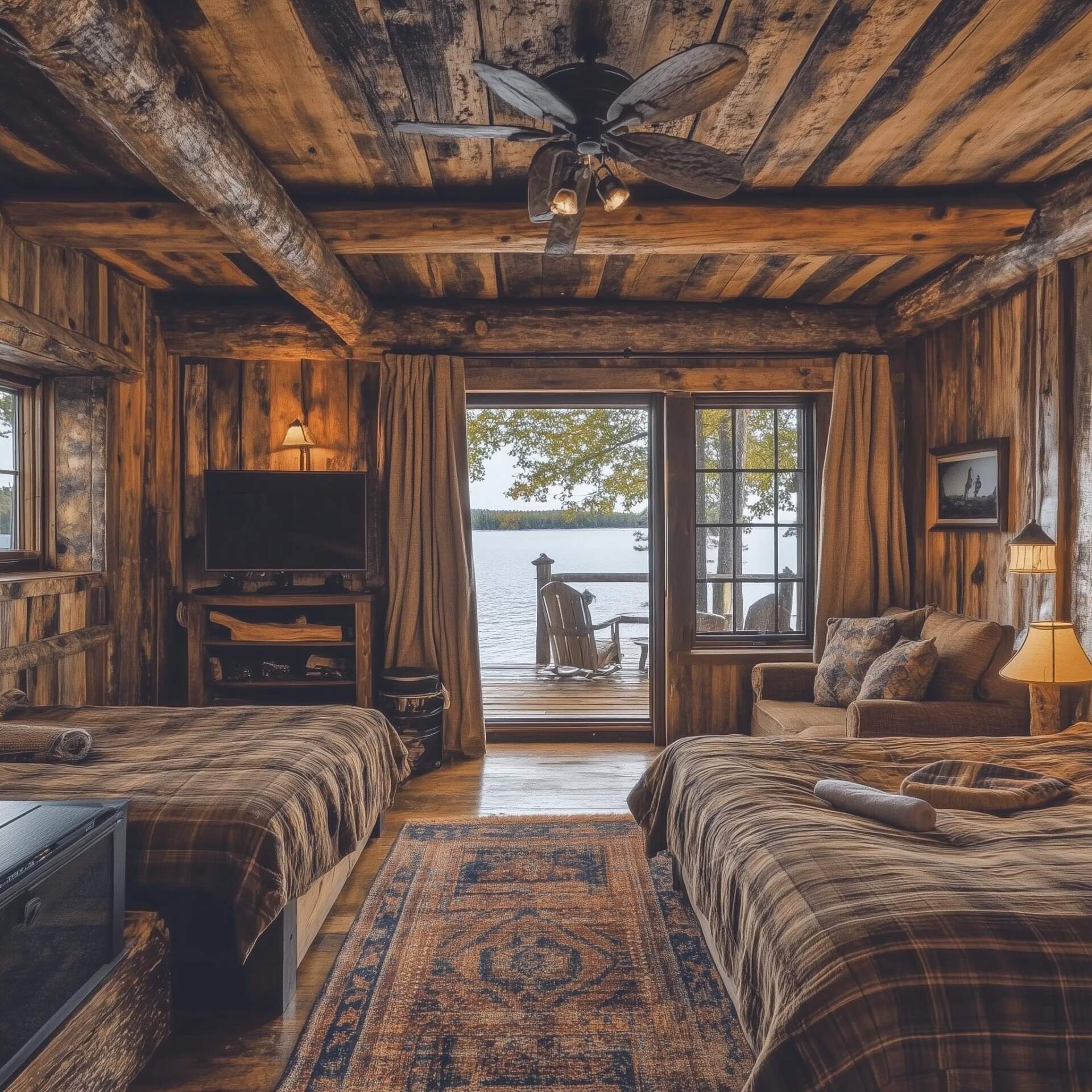
At Econfina Sporting Club, you’ll find the rare blend of rugged charm and upscale comfort. The architecture and decor nod to the great Southern hunting lodges—wood paneling, stone fireplaces, and trophies on the wall—but everything is freshly polished and thoughtfully designed. Each guest room is a comfortable respite with plush bedding, fine linens, and private modern bathrooms, so you can unwind in style after a day on the water (See the Rooms at the Econfina Sporting Club).
Importantly, it’s blissfully quiet—the lodge is set on a large private property along the Econfina, far from any highway noise or crowded marinas. As you sip a bourbon on the porch at dusk, listening to crickets and distant owls, you’ll feel a world away from any hustle and bustle.
If Econfina is fully booked or not on your route, there are a handful of other lodgings in Steinhatchee—from rental cottages to small inns—that can suffice for a night’s rest. They’ll put a roof over your head, certainly. But none combine the privacy, luxury, and tailored sporting services that Econfina offers, which is why many hunters and fishermen make their base there.
Exclusivity & Service
This isn’t your run-of-the-mill motel or fish camp cabin. Econfina Sporting Club prides itself on personalized service tailored to the sporting lifestyle. There’s a hint of old-world gentility—staff members who remember your name, guides who are as skilled at storytelling as they are at spotting redfish tails in the marsh.
Other area accommodations might offer a bed for the night, but they often lack the character or privacy seasoned sportsmen expect. (Indeed, some alternatives in the region are little more than basic motel rooms with thin walls—fine for the casual traveler, perhaps, but not up to snuff for those used to comfort after a day of exertion.) In other words, at Econfina, you won’t be rinsing off in a mildewy shower or hanging wet gear off a motel railing. You even have on-site laundry service if you need it. It’s these thoughtful touches that set the Sporting Club apart.
Location—Close to Nature
Right near the Econfina River and not far from Steinhatchee, the lodge offers a strategic vantage for both freshwater and saltwater fishing adventures.
For scalloping trips specifically, you can arrange charters or boat rentals that depart from quieter launches closer to the Econfina area if you prefer an uncrowded experience. Or, if you want to join the Steinhatchee action, it’s an easy drive to the Steinhatchee marina in the morning.
Many guests bring their own boats—the club has secure parking and can assist with logistics. The benefit of lodging a bit off the beaten path is that you also have access to other activities: maybe a bass fishing trip at dawn in the Econfina River’s freshwater stretches before scalloping, or a guided duck hunt if you visit in winter. The club is a gateway to all of that.
Dining & Accommodations
A highlight of Econfina Sporting Club is coming back to the lodge after your scalloping adventure and sharing tales with fellow guests in the grand room or over dinner. The club offers world-class dining that reflects regional flavors.
Imagine enjoying your own freshly harvested scallops as the centerpiece of a meal: the lodge’s chef might prepare them “hunter’s style”—lightly breaded and flash-fried, served with a lemon-garlic aioli and hushpuppies—a refined twist on the local tradition of breading and frying most of the catch. Or perhaps you prefer them simply seared in butter and herbs; the kitchen will happily accommodate.
Many coastal restaurants in Florida will cook your catch for you, but here it’s done to gourmet standards, plated and served in a warm atmosphere of leather, wood, and flickering lantern light. You can swap stories with other sportsmen about the day’s finds, maybe brag a bit about that elusive “monster scallop” (three inches across!) you snagged in a hidden pocket of grass.
It’s worth noting that Econfina Sporting Club caters to a clientele that expects the best. While others in town might make do with a no-frills bunkhouse or a crowded marina motel (where the nightly entertainment is the noise of someone cleaning fish outside your door), it’s important to know that you have another option. At Econfina, you retire to feather pillows and high-thread-count sheets, with the call of night herons lulling you to sleep. In the morning, you’ll wake refreshed to a hearty country breakfast, hot coffee, and maybe a hint of woodsmoke from the kitchen—ready to embark on another day of Gulf Coast adventure.
Cleaning & Cooking Your Scallop Haul
From Sea to Table
With a day’s limit of scallops clinking in your cooler, you’ve got in your possession some of the sweetest, most succulent seafood Florida has to offer. Now comes the rewarding part on land: cleaning the scallops and preparing them for a well-earned feast. Part of the sporting lifestyle is savoring the fruits of your skill and labor, and bay scallops are a true delicacy, whether cooked simply or elevated into gourmet fare.
Cleaning Your Catch
The task of cleaning scallops is best treated as a post-adventure ritual. In Steinhatchee and the Big Bend, it’s common to see groups gather around a table by the dock or on a lodge porch, each armed with a knife or spoon, turning the day’s haul of shells into a bowl of pure white meat. Here’s how to clean bay scallops effectively:
- Cool and Open: If you’ve kept your scallops on ice (as you should), many will have already relaxed and cracked slightly open by the time you start cleaning. This makes the job easier. Keep them cold as you work—a bowl of ice or a damp towel over the uncleaned scallops helps.
- Tools: All you really need is a simple utensil like a butter knife or a spoon. Sharp knives are unnecessary (and actually less safe) because you’re prying and scraping rather than slicing. You’ll also want a “discard” bucket for shells and guts, and a separate container for the meat. Many use a small cooler or Tupperware for the cleaned scallop meats.
- The Technique: Hold a scallop in one hand, dark (top) shell upward. Insert your spoon/knife at the hinge (back) or the side gap and pry the shells open. It might take a little twist. Once open, run your utensil along the inside of the top (dark) shell to detach the scallop’s muscle from that top shell. The top shell can then be discarded into your scrap bucket. Now you’ll see the scallop’s innards sitting in the cupped bottom shell—a creamy mass encircling the white round muscle. Use the spoon to scoop out everything except the white scallop meat. With a deft flick, scrape the guts into the discard pile, leaving just the clean meat attached. Finally, free the meat by scraping it off the bottom shell. Drop the nugget of meat into your clean container, and toss the bottom shell. Repeat about a hundred times! (A limit of 2 gallons whole can be around 100–150 scallops, depending on size.)
- Keep it Sanitary: Rinse the scallop meats in cool saltwater or lightly salted water once you have a batch, to remove any grit. Avoid using fresh water until you’re about to cook; prolonged soaking in fresh water can affect the texture. Also, wash your hands and utensils periodically—scallop cleaning can get slimy, and maintaining cleanliness ensures the best tasting meat and avoids any food-borne issues. If cleaning at a public dock, be courteous and dispose of shells properly—either in designated bins or far offshore later. (Don’t dump piles of shells at the marina or shoreline where people swim; FWC notes that accumulating shells can create hazards and harm seagrass in shallow areas.)
With a bit of teamwork, a limit of scallops can be cleaned in well under an hour. Often, family and friends make an event of it—one person might play some music, another mixes cocktails or pours iced tea, and everyone takes a seat and starts shucking. Tall tales from the day’s dive are traded (“I must’ve grabbed 200 but only kept my share”), friendly banter ensues, and before you know it you have a bowl full of treasure: the tender white scallop meats, each about the size of a large marble or thimble, ready to cook.
Cooking Your Scallops
Bay scallops are sweet, delicate, and very tender—often eaten the same day they’re caught for maximum freshness. The golden rule is do not overcook them. They can turn rubbery if cooked too long. Usually, 2-3 minutes of heat is all they need since they’re so small.
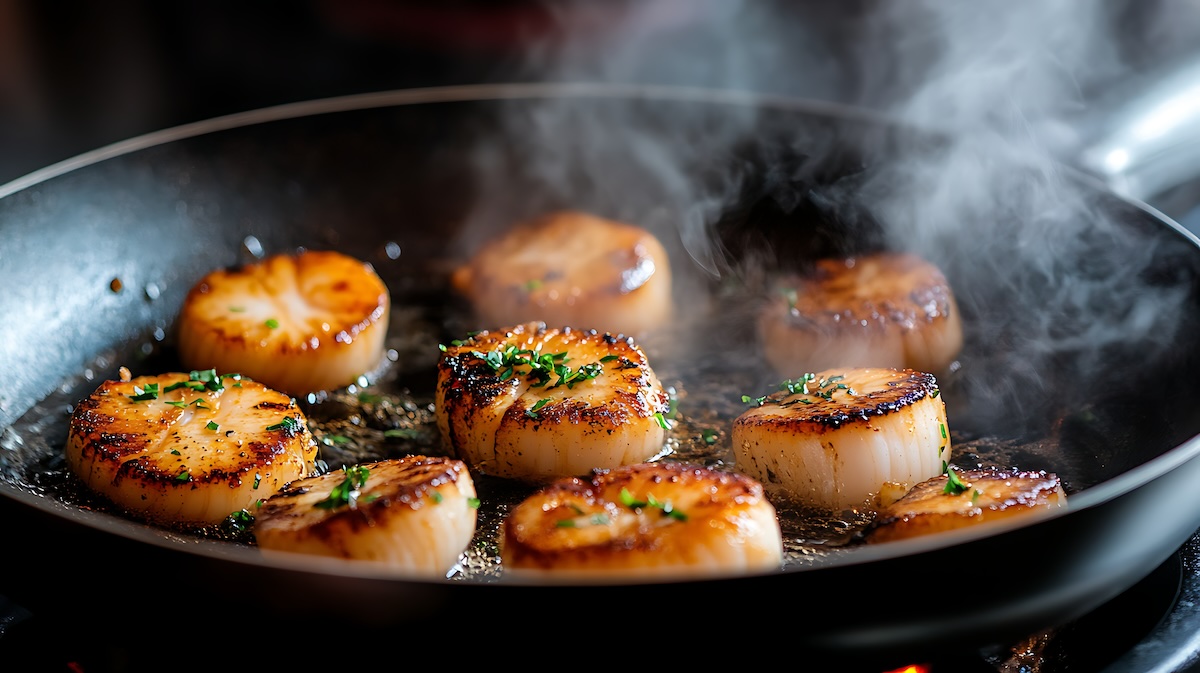
There are countless ways to enjoy them, but here are a few preparations that particularly suit the scallop and the Big Bend tradition:
- Classic Pan Sear: Perhaps the purest way to enjoy scallops is a quick sear. Pat the scallop meats dry, season with a pinch of salt and pepper, and then sauté them in a hot pan with a blend of butter and olive oil. Add a crushed clove of garlic and a squeeze of lemon juice at the end for a simple sauce. In literally 2 minutes flat—just as they turn opaque—they’re done. Serve on a warm plate. They’ll be golden-crusted on the outside and still succulent inside. A sprinkle of fresh parsley or a dash of white wine to deglaze the pan isn’t a bad idea either. This method showcases the scallops’ natural flavor.
- Lightly Breaded and Fried: The old Florida way, and a favorite around local campfires and fish fries, is to batter and fry ‘em. Toss the scallop meats in seasoned flour or breadcrumbs (some folks use cornmeal or cracker crumbs). Then flash-fry in hot oil (about 350°F) for maybe 1 minute per side until just crisp and barely golden. Drain and sprinkle with a bit of Old Bay or just salt. These fried scallops are dangerously poppable—like gourmet popcorn from the sea. They pair wonderfully with tartar sauce, cocktail sauce, or simply a squeeze of lime. At coastal gatherings, you’ll often see a big platter of fried scallops alongside hush puppies, coleslaw, maybe cheese grits—the makings of a proper Southern seafood feast.
- Scallop Ceviche: Given how fresh Big Bend scallops are, you can even enjoy them “raw” in a ceviche if you take care. This is a more adventurous preparation, but very rewarding on a hot day. Dice the scallop meat and marinate in fresh lime juice for about 20-30 minutes—the acid “cooks” the scallops, turning them firm and opaque. Then mix in finely chopped red onion, cilantro, a touch of jalapeño, and tomato. Add salt, pepper, and perhaps a splash of Florida orange juice or a diced mango for a sweet note. Serve chilled with tortilla chips. The scallops’ sweetness shines, accented by the citrus. This dish reflects the Gulf’s proximity to tropical influences and is often a hit as a light appetizer. (Always use only the freshest scallops for ceviche and keep everything well-chilled.)
- Bacon-Wrapped Bites: If you managed to keep some larger scallops (maybe from late-season when they’re big), an appetizer that often wows guests is bacon-wrapped scallops. Each scallop gets hugged by half a slice of bacon (perhaps brushed with a maple glaze or a hint of cayenne), secured with a toothpick, and then grilled or broiled just until the bacon crisps. The smokiness of bacon complements the sweet scallop—it’s surf-and-turf in one succulent mouthful. Just be cautious not to overcook; precook the bacon a bit if needed so the scallop doesn’t turn tough waiting for bacon to crisp.
- Chowders and Pastas: If by some miracle you have more scallops than you can eat straightaway (or maybe some that were frozen for later), consider using them in a creamy bay scallop chowder with corn and potatoes, or a luxurious pasta (think linguine with scallops, garlic, white wine, and a touch of cream). These extend the flavor and can feed a larger group, but purists will note that the delicate scallop can get a bit lost in heavy dishes. For a first-night meal, simpler is usually better to truly taste the catch.
Local Tradition—Cook Your Catch: Many visitors staying in Steinhatchee or Keaton Beach will take their bag of scallop meat to a local eatery that offers a “cook your catch” service. For a modest fee, the chef will prepare your scallops in a variety of ways—blackened, fried, sautéed—and serve them with sides. It’s a fun way to celebrate your successful day without having to do the culinary work. However, if you’re at Econfina Sporting Club, you essentially have that built-in, with a gourmet touch. They can prepare your scallops exactly to your liking, be it a refined dish or a down-home fry-up, and you can dine in the comfort of the lodge. Some nights might even turn into impromptu cooking lessons or recipe swaps, as fellow sportsmen discuss their favorite preparations (don’t be surprised if someone from Louisiana shares a tip about a spicy remoulade, or a New Englander waxes poetic about Nantucket bay scallops vs. Florida’s).
As you enjoy your meal, whether it’s on a paper plate at a picnic table by the water or on fine china in a clubhouse, take a moment to appreciate the full journey of the day—from spotting that first glimmer of blue in the seagrass to the plate in front of you.
Bay scallops have a flavor that’s often described as sweet, nutty, and rich with the essence of the sea. They carry with them the taste of the Gulf’s pure waters and the satisfaction of an adventure earned. Paired with a crisp white wine or a cold local beer, and in the company of friends or family, there are few rewards more fitting after a Big Bend scalloping expedition.
Final Thoughts on in Florida’s Big Bend
Scalloping in the Steinhatchee and Econfina area of Florida feels a world apart from theme parks and crowded beaches. For the upper-middle-class sportsman accustomed to quality, this experience delivers in spades: unspoiled natural beauty, a little physical challenge, and the fun of a shared family-friendly activity, all capped off by the indulgence of fresh seafood that you harvested yourself.
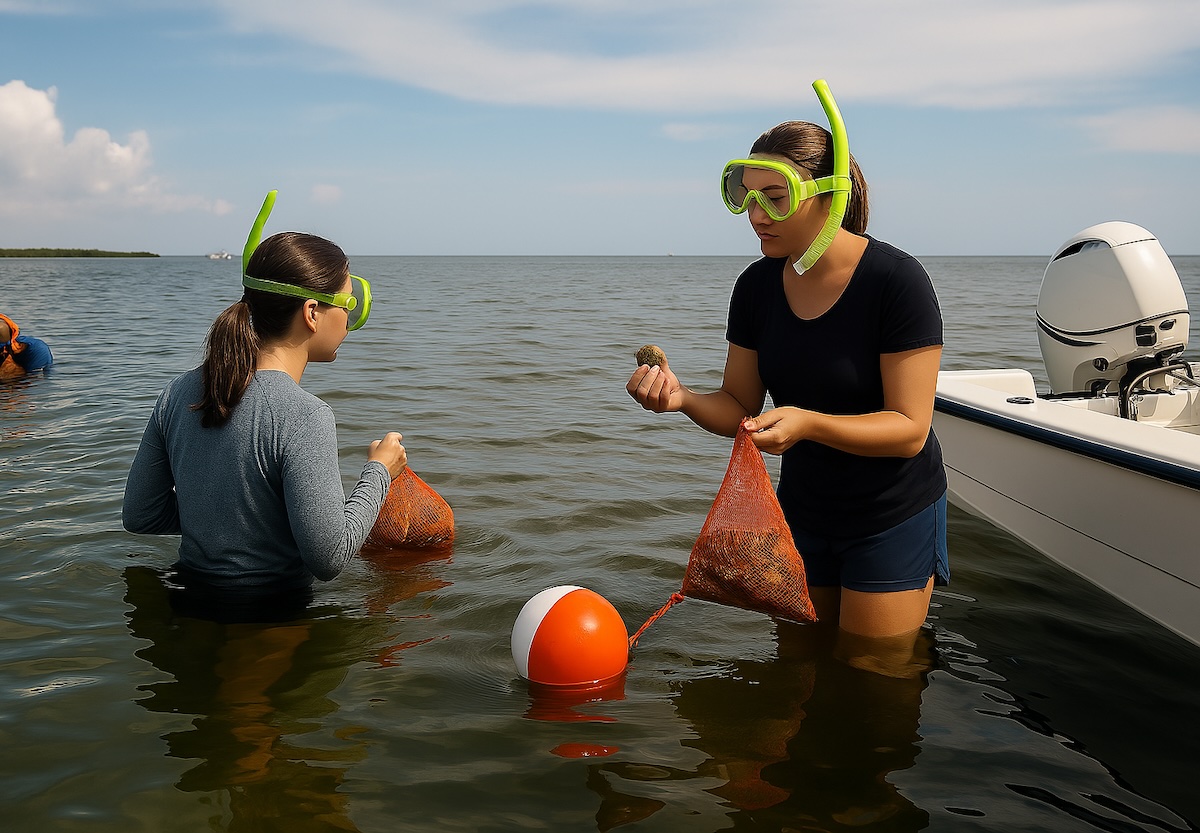
Freshly harvested bay scallops from the grass flats—a fine day’s haul. These mollusks blend perfectly into the seagrass, with camouflaged brown-and-green shells and a pearly interior. In recent years, the Steinhatchee area’s scallop populations have been robust, yielding easy limits for those who venture out.
As you cruise over grass flats that stretch to the horizon, with the sun overhead and the scallop-rich waters of the Big Bend below, it’s easy to feel a profound connection to this place. Perhaps it’s the echo of old Florida—a place where families have, for generations, come to “make their dinner” from the sea, where kids learn to snorkel almost as soon as they can swim, and where the values of self-reliance and respect for nature are passed down like heirlooms. Near Steinhatchee, the Econfina River flows through pristine marshland, unchanged and eternal, offering a refuge for those who seek both adventure and some peace and quiet.
By scalloping in the Big Bend, you’re taking part in an “Old Florida” tradition that hearkens back to a bygone era, when summers were for outdoor adventures, storytelling under starry skies, and the simple pleasure of a day well spent in nature. You’ll leave the boat with more than a cooler of scallop meat. You’ll carry back memories of sun-dappled waters, the surprise of spotting those sapphire eyes in the seagrass, the laughter echoing across the flats each time someone popped up triumphantly with a handful of shells, and the sublime taste of fresh scallops that evening—a taste inherently tied to this place.
For those lodged at Econfina Sporting Club, the experience is elevated even further: your days tempered by outdoor excitement and your evenings wrapped in comfort. It’s a reminder that one can enjoy the best of both worlds—the raw beauty of the wild and the pleasures of civilized living—in a single trip.
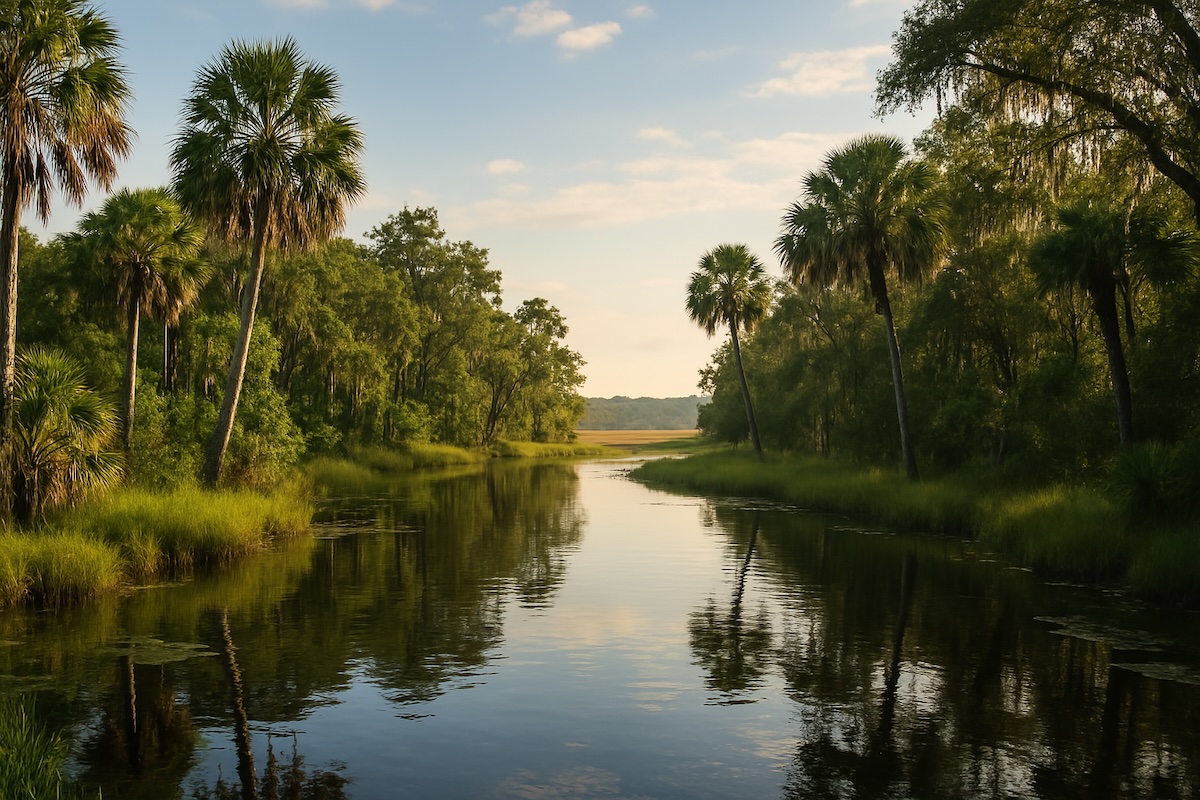
As you leave the Big Bend, you might find a bit of seagrass still tangled in your cooler or a forgotten scallop shell rattling in the boat—little souvenirs from a corner of Florida that generously shared its hidden treasures with you. The next time you hear someone talk about Florida’s coast, you’ll have a knowing glint in your eye, recalling Steinhatchee’s grass flats and Econfina’s wild shores, and perhaps you’ll reply: “You haven’t truly lived the Florida life until you’ve gone scalloping in the Big Bend.” And then, you’ll start planning your return, eager to once again don your mask and fins, and dive into those gentle Gulf waters for nature’s underwater treasure hunt.
Go scalloping with us! Florida Scalloping Trips
Sources:
- Florida Fish and Wildlife Conservation Commission—Bay Scallop Regulations and Season (https://myfwc.com/fishing/saltwater/recreational/bay-scallops/)
- Florida Sea Grant—Scalloping Preparation and Safety Tips (https://www.flseagrant.org/fisheries/scalloping/)
- Sea Hag Marina (Steinhatchee)—Fishing and Scalloping in Steinhatchee, Florida (https://seahag.com/marina2/fishingreports/basicfishing.htm)
- Bassmaster Magazine—”Dive into Florida’s scallop roundup” (https://www.bassmaster.com/go-explore/news/dive-into-floridas-scallop-roundup/)
- Florida State Parks—Econfina River State Park (https://www.floridastateparks.org/parks-and-trails/econfina-river-state-park/)
- University of Florida Institute of Food and Agricultural Sciences (IFAS) Extension (Hernando)—How to Clean a Scallop (https://blogs.ifas.ufl.edu/hernandoco/2022/06/09/how-to-clean-a-scallop/)
